.avif)
Brand Portland Panel: What’s Next for Portland? How Storytelling and Marketing Will Shape the City’s Future
Portland has long been known as a city that punches above its weight culturally. From its progressive roots and creative energy to its global moment in the early 2000s, Portland became a recognizable brand. Over the past several years, however, the narrative has shifted. Economic disruption, the pandemic, and public perception challenges have raised important questions about how the city shows up on the national and global stage.
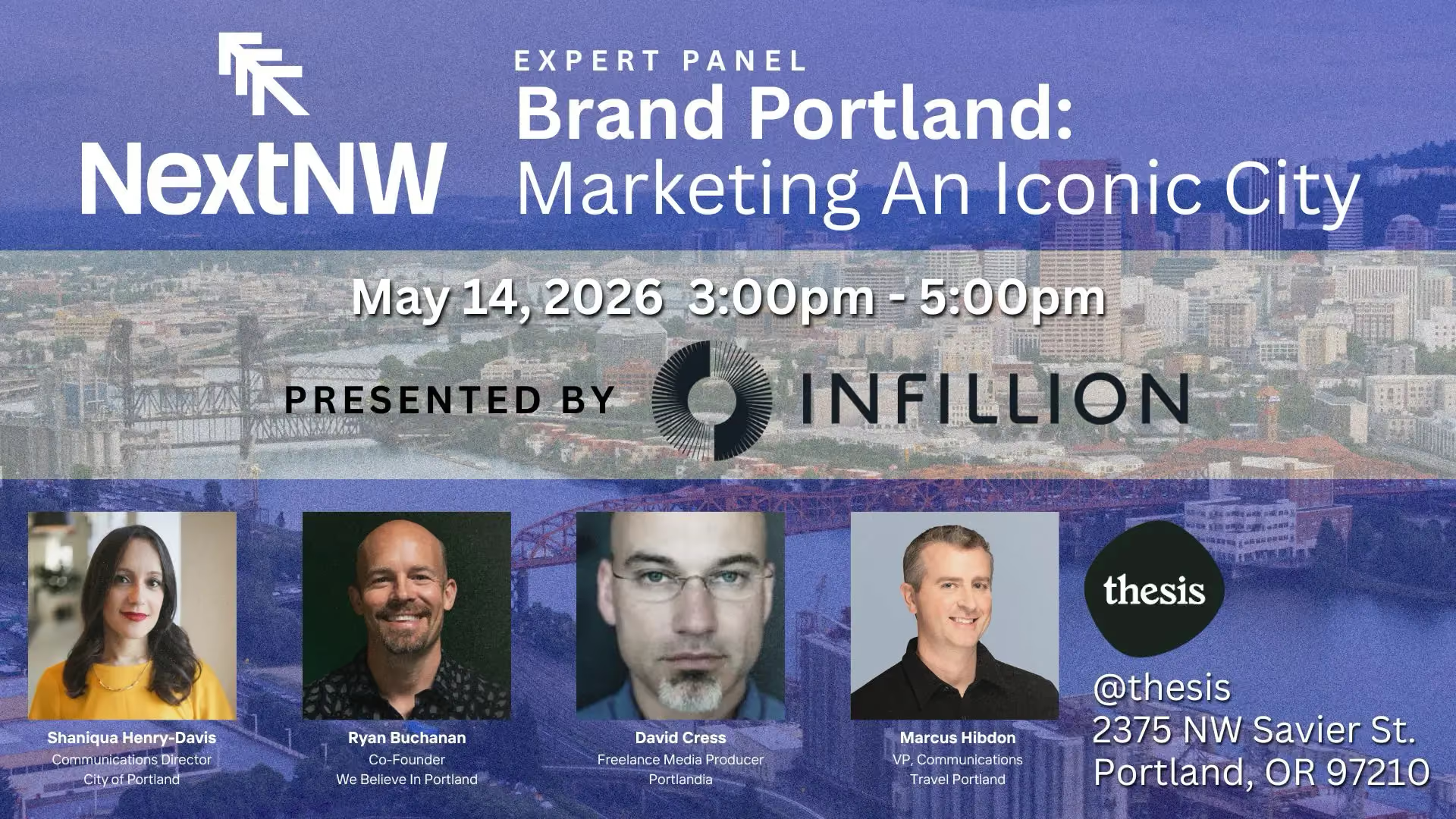
So what comes next for Portland’s brand? On May 14 at 3 pm, NextNW will host a live panel at Thesis Headquarters to explore how Portland’s story is evolving and what the marketing, advertising, and creative community can do to help shape its future. The session, Brand Portland: Marketing an Iconic City, brings together leaders from tourism, city government, media, and the creative community who all play a role in how Portland is seen by visitors, residents, and businesses.
Meet the Panel
Marcus Hibdon: Vice President of Communications and International Tourism, Travel Portland
Marcus leads global communications and tourism marketing efforts that position Portland as a destination for travelers around the world.
Shaniqua Henry-Davis: Communications Director, City of Portland
Shaniqua helps guide the city’s public messaging and communications strategy, shaping how Portland’s story is told at the civic level.
David Cress: Freelance Media Producer, Portlandia
David has helped bring Portland’s culture to a global audience through media production and storytelling.
Ryan Buchanan: Chairman at Thesis, Co-Founder of The Script, and Co-Founder of We Believe in Portland
Ryan has long been a champion for Portland’s creative and business communities and has played a key role in campaigns that celebrate the city’s identity.
The Questions We’ll Be Asking
To kick off the conversation, we asked panelists to reflect on a few key questions that matter to marketers and creatives across the region.
1. Portland’s reputation has shifted significantly over the past decade. From your perspective, what parts of the city’s original brand still resonate today and what aspects need to evolve?
Marcus: We are still and always be a progressive city surrounded by the natural beauty of Oregon and populated with a creative class of residents who value small independent businesses. Portland prides itself on being different and unique and not becoming the “next” anywhere. This city built itself for itself based on its own shared community values: Craft everything, owner-operated, doing things the hard way because that is almost always the right way. And for travelers seeking something unique Portland still delivers - we are not like anywhere else. What needs to evolve in my opinion - and it’s a fine line between evolving and over-evolving - is some of the parochialism and the idea of local, local, local which is important. If you look at some of the city’s most successful brands like Stumptown, Portland only allows you to become so big until you sell out and that is something that should change. We should celebrate those brands which began here and then made its movement bigger by expanding. Stumptown is the perfect example when you look at coffee. Also, we should look more to other city’s successes and model ourselves on those more without feeling like we need to do something totally unique and novel. It’s ok to steal a page out of the playbook every once in awhile.
Shaniqua: A lot of Portland’s major selling points are still true. This is a city for people who want to feel like they’re in a small town when they’re in their neighborhood. Nature and environmental preservation remain a core value. Portland also benefited from being viewed as the one major city on the West Coast where you could afford to raise a family. We can still be that, but we need to work harder—as a City and as a State—to grow economic opportunities and address the housing crisis.
Keep Portland Weird needs to evolve. The “come as you are” intent of it is great, but it’s never been as broadly inclusive as we should be, and it unfortunately became construed by some that we’re unserious or contrarian.
David: Portland’s brand was built when the city was easily the most affordable city on the west coast. Then Portland experienced a a big growth spurt at the same time the US housing market and cost of living where climbing. For a lot of artist and creative thinkers the city became unaffordable. The city needs to work on policies that right size the affordablity of the city. This may mean less big swings and trying to engineer rapid expansion. Make sure its affordable to artist and the reputation problem may solve on its own.
Ryan: Portland’s brand is rooted in high-quality, small-batch craft and is a fiercely independent creative hub. That still fits. The anti-business socialism that pervades Portland City Council and a vocal minority of its constituents is accelerating a massive wealth drain out of Multnomah County. A strong tax base funds all of the social services that Portland relies on to have a functioning city. We are actively addressing Portland’s #1 issue of public safety + homelessness, but we need to pass tangible ballot measures this year like adding 400 more cops with no new taxes. We need to solve the #2 issue of tax reform by putting a moratorium for 5-10 years on Preschool for All and SHS. And we need to reinvest in innovation and economic development to address the third leg of the stool for Portland.
2. Portland once enjoyed global attention through tourism campaigns, media exposure, and shows like Portlandia. What storytelling opportunities exist today that could help reshape how people see the city?
Marcus: Travel Portland focuses a lot on story-telling the city and admittedly we tend to paint with a pretty wide brush, but there are still so many things unique to Portland that people need to know about. We talk about the culinary scene a lot and we should because it really is one of the best you will find anywhere. It’s different now and the people really driving the innovation and creativity in new restaurants are people of color. Portland is having an emergence in many areas in this regard, but its very visible in the culinary world and relatively few place compete with us. Certainly, there are many places that have deeply diverse culinary scenes, but they have been established for a long time. In Portland its emerging and its really a story of recovery of the city. In a time when many people saw Portland as a place you should fear, people of color saw opportunity.
Shaniqua: Portland is getting the most high-profile attention lately for being one of the cities on the front lines of the resistance to U.S. authoritarianism. The Portland frog and the “war-ravaged” social trend were fantastic moments. Plenty more opportunities remain to continue telling this story.
David: I’m repeating myself, but I think it's hard for a place to “engineer” its way to a great reputation. Now, building on trends and amenities that assist organically can be helpful. I’m aware of Portland magnifying its growing farm-to-table movement by some smart initiatives, but I’d ask the city not to get so over its skies on promotion that local residents can no longer afford to create or participate in the initiatives and trends that lead to the city’s livability.
Ryan: 100% of our problem is internal branding and storytelling, not external. We need to get the people of the Greater Portland region to believe in the city again. They truly love Portland but they are so frustrated with it that so many folks don’t come downtown anymore and they tell negative stories about Portland to themselves, their families, and their friends. We need a Win Back campaign to our own people to acknowledge the pain and frustration AND highlight all the inspiring stories here. To me, entrepreneurs are the heart of the comeback story in Portland.
3. Many cities are competing for the same visitors, residents, and businesses. What unique strengths does Portland have that marketers should lean into when promoting the region?
Marcus: I’ve mentioned food and small, owner-operated businesses and the craft side of it all. I think what we really need to lean into is the accessibility of all of these things. How many cities can you go to and eat at a restaurant that was just written about in the NYT or Bon Appetit often without even a reservation and see the chef from the article working the pass? How many cities in the U.S. have a truly world-class wine region at all let alone one that you can get to in about 35 minutes? Or a mountain and a million acres of national forest that you can ski at or hike in the morning and be back in the city by happy hour? The coast 1.5 hours away. We have all these things and more so accessible in our city and right next to our city. Most places would be happy to have one or two of these and Portland has numerous.
And, maybe I would argue, that even though we get things wrong a lot Portland cares about itself and its residents and its vulnerable populations and everything else and we want to get it right. It’s hard to get it right, but of everywhere I’ve lived before Portland cares more about these issues more than they care about themselves as individuals.
Shaniqua: Women’s sports. Between the Thorns, the Fire and The Sports Bra, Portland is a premier city for fans. The proximity to nature and outdoor recreation is of course a big draw for prospective Portlanders, as well as tourists and business travelers. And as locals know, the restaurant & bakery scene here is among the best in the country. The opening of the James Beard Market will open up even more opportunities to market the Portland metro area as a food & wine travel destination.
David: Portland livability remains. It's affordability that's the issue. We still have the same outdoor amenities, the same art and culture-loving educated citizens. We need to be careful to right-size our government and services so that we make it affordable for the next generation of citizens and creative thinkers
Ryan: If we can just get the basics right - public safety and reasonable taxes, Portland has unbelievable natural beauty that very few other cities have. We’ve got arguably the best foodie scene in the country. We have become a much more inclusive city and I think we should lean into radical hospitality here. We’ve got a great culture of entrepreneurship here - willing to take big risks to do something beautiful (instead of doing things out of pure greed).
4. How can public agencies, tourism organizations, media creators, and the private sector work together more effectively to promote a unified Portland narrative?
Marcus: Well if you’re interested in showing positivity and speaking positively about the city, get my card. We are looking for people who still believe in Portland - that number is growing by the way. A lot of people are starting to believe again and there is no small number of people who never stopped even during the hardest times. The unified narrative needs to be honest and realistic. We’re not back. Portland is never going back to what it was from 2010-2020, for many reasons some of which are very good. We are different. We are a different city than we were for many, many good reasons. Diversity and, at the least, the heartfelt pursuit of equity and inclusion being chief among them. We are place figuring it out, but doing so from a place that is meant to make a better world based on our values. We’re not relying on old tactics to solve long-standing issues. We’re trying novel approaches. Measure 110 is a perfect example of this. It didn’t work … for a lot of reasons, but the idea itself wasn’t bad. Rolling it out during a pandemic when we had trouble scaling everything let alone some of the hardest work out there was incredibly difficult. The idea of providing people treatment over prison was noble. So speaking about the potential of this place and its ability to drive progress is the unified narrative I want. And if you have a story to tell here, tell me because Travel Portland has been working on telling these stories to improve sentiment.
Shaniqua: We absolutely need to work together because we all have different strengths, different ideas, and different resources, and we are united in wanting Portland to succeed. The “how” is more complex, but it has to start with aligning on a few specific, measurable goals and a clear vision of what we want to be known for.
City leaders in every sector should also view themselves as ambassadors of Portland and speak well of our city externally. That hasn’t always been the case, and it certainly didn’t help our reputation.
David: I think realistically, with the economy we have and the very real possibility of a vicious downward cycle, the city and regional government need to attend to the basics. Fewer big swings and building new projects when we are not maintaining the things we already have. Rethink it all. Batten down the hatches and start considering how changes affect the affordability of the city. Portland's reputation was not made on performances in large and grand spaces. It was artists creating where they could, when they had the time to do that, when they did not have to hustle and grind to pay ever higher rents. Is it possible that Portland's reputational competitive advantage could be that we do less and try to gain a better balance in the cost of living here?
Ryan: I don’t think this is our problem. We’re telling a relatively unified story. The problem is that Portland citizens don’t believe the story because we aren’t making tangible changes in legislation and governance around public safety and tax reform. It’s all talk and no action. Additionally, we can’t put all of the onus on the government. We have a responsibility as citizens to serve others who aren’t as fortunate as we are - that goes a long way. Less talk, more doing. That’s the answer.
5. Looking five years ahead, what would success look like for Portland’s brand and reputation, and what role should the creative and marketing community play in getting us there?
Marcus: Continue to make good stuff is No. 1 to me and tell people how Portland helps you make it. We’re a creative capital because of the lifestyle we have here. Smart, creative, talented people want to live here. So tell people that and build your business by bringing more people like you here. I always say that people find success in Portland because we have a different definition of it. Here it’s living a good life and giving back. Other places are more focused on world domination, unbridled growth, etc. You can have that here. One of my favorite chefs in town would always say, “I’m a huge celebrity … on my block.” And that’s the most on brand thing I can think of.
Shaniqua: Elevating Portland’s brand and reputation shouldn’t just be a point of pride—it should meaningfully benefit existing Portlanders as well as draw in new ones. So, success would look like more job opportunities, more customers at our local businesses, and more confidence from folks outside Portland that this is the right place for them to be.
Portland is lucky to have a robust creative and marketing community that can be instrumental in refining our city’s unique value proposition into a brand and helping drive the public narrative and campaign to reach new audiences.
David: If we can draw back on expenses and contain tax and user fees, and we emerge from this coming challenging time as a city that's not trying too hard to be grander or cuter than any other city, we can start again to appeal to creative people as an affordable West Coast city. As long as livability and affordablity our the guiding principles, the problem will solve itself.
Ryan: Success looks like a Portland that is seen as a welcoming place where innovative founders like Kim Malek, Sadie Lincoln, Alicia Chapman, Tyrone Poole, Jason Bolt, Marty Kagan, and thousands more like them can truly thrive here and don’t feel like they have to stay in Portland as charity. They stay here because the city lifts them up and truly helps their businesses.
Join the Conversation
If you work in marketing, advertising, design, media, or communications, this discussion will offer insight into how Portland’s story is being shaped and how our industry can play a role in the city’s next chapter. Join us on May 14 at 3 pm at Thesis Headquarters for Brand Portland: Marketing an Iconic City. Seats are limited, so reserve your spot today and be part of the conversation about Portland’s future.

Stay connected with NextNW
Get insights delivered straight to your inbox every month or learn more about becoming a member!